I’m excited to now offer various forms of vessels for fermentation of foods and drinks such as kimchi, sauerkraut and kombucha.
I currently have a mix of styles: some inspired by Korean onggi pots and other more modern-design crocks with an air trap rim (in various sizes and colours). And a fusion of both. If you need clay weights for your ferments, I got you!
At the moment I am playing with forms and styles and learning what works well and what I actually like aesthetically, but as time goes on I will likely standardise the lines a little.
Onggi jars
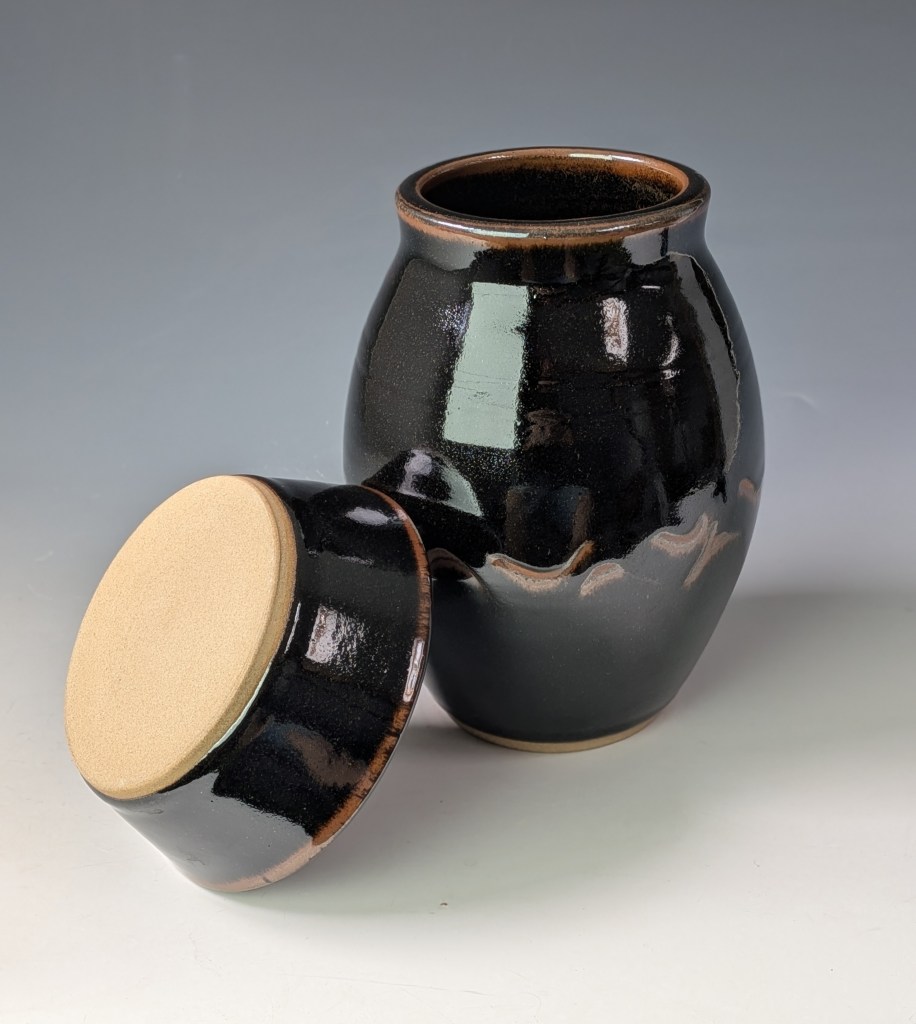
Onggi are the traditional lidded jars used for thousands of years to ferment foods in Korea. The earliest found date as far back as the Neolithic!
Traditional onggi are most often fired at lower kiln temperatures (earthenware) leaving a porous clay that allows the pot to ‘breathe’ but also meaning water can seep through the body and mould can grow. My versions are high fired to near 1300C, meaning they do not absorb water and can be washed with soap if desired (rinse well after).
Onggi come with a lid but don’t have an air trap and, as such, do not fully seal the contents away from the air outside. You can merely put the lid on and have a more open ferment. In Korean tradition, I believe they are not often sealed unless for longer storage.
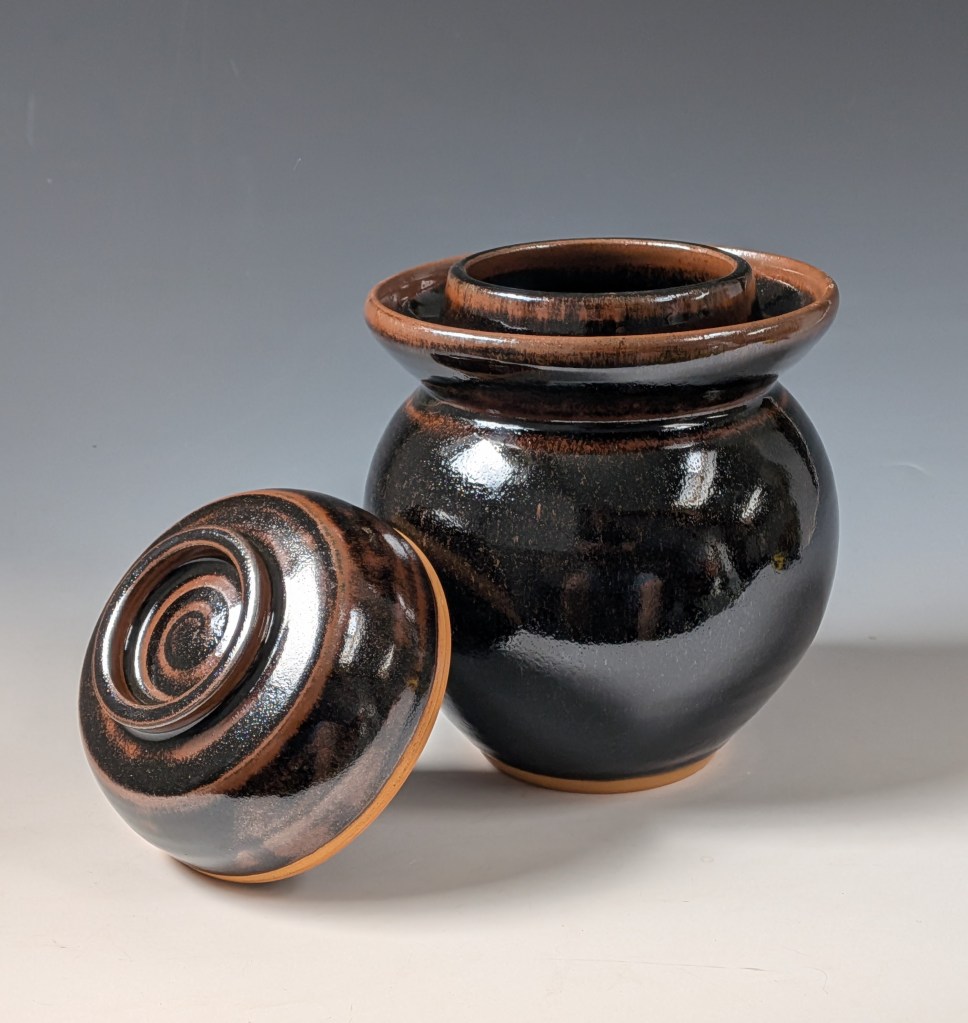
If you prefer, you can make a seal by covering the top opening with a layer of plastic wrap held in place with a rubber band. This allows gases from the fermentation to build up a little pressure inside and escape, while preventing air and bacteria from coming into the crock. I do this and it works very well! You will see the plastic wrap balloon up a little in the ferment to show that the bacteria are doing their amazing work to make your lovely, healthy food.
Onggi without a seal are not recommended for long fermentations beyond 5-6 days, especially in a warm environment.
Some of the onggi lids also double as a bowl when inverted, so act as a handy vessel for tasting your kimchi. Others have knobs so aren’t stable when upside down.
Here’s an informative blog from Kimchi Gardens about using a traditional onggi.
Water-trap crocks

For my more modern fermentation crocks with a water trap built into the rim, I am offering more glaze colours, and currently have white, green, blue and iron red or dark-brown available. Some are styled to look like Korean onggi, while others are more moderent forms.
For food safety, the interiors are lined with a non-crazing (crackling) white or iron-brown glaze with no toxic ingredients.
To use air-trap crocks, after adding the contents to be fermented and (optionally) placing your weights, pour a little water into the rim trough and place the lid on. This makes an effective seal, allowing gases to escape but greatly reducing the chances of mould or other contamination getting in.
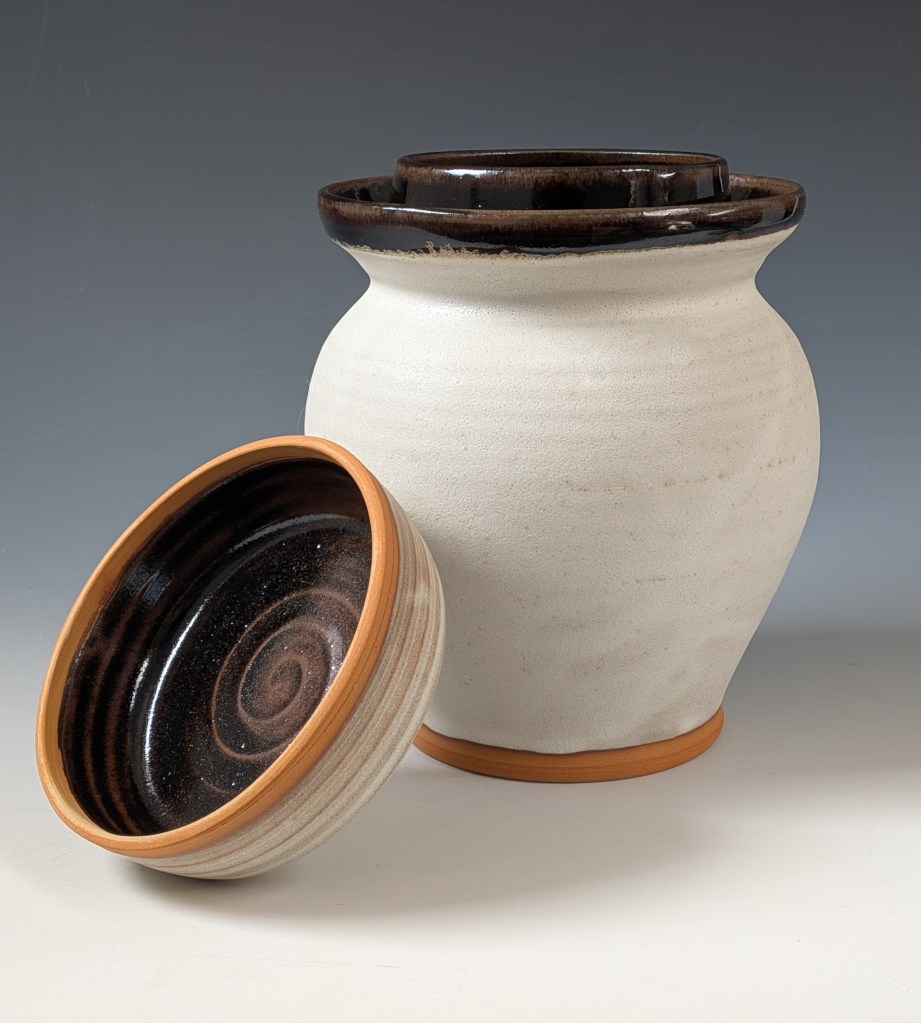
My rims are made taller on the inside of the trap, so the chances of water spilling into the jar are much reduced. Make sure to watch the water level as the fermentation progresses and top up if needed.
Depending on the lid style, some of these can also be flipped for use as a bowl.
Using clay weights
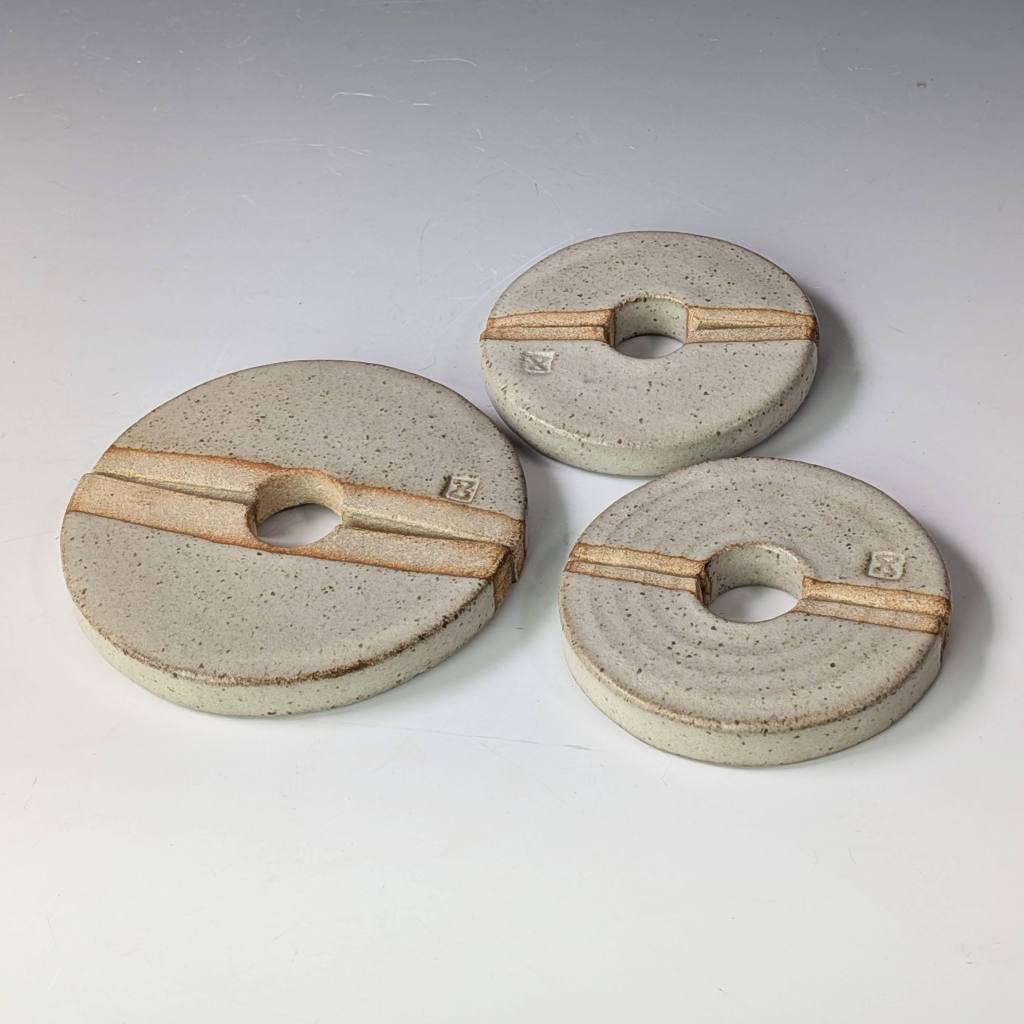
It’s desirable, but not essential, to use simple clay weights to hold down the solid contents of your fermentation crock so they stay below the surface of the liquid, or to keep the contents compressed.
My handmade clay weights are either glazed or unglazed clay fired to near 1300C. This means the clay is vitrified and will not absorb water.
The weights come as two halves of a circle, making it easier to insert them in the crock and remove them later. They have my maker’s stamp on one half.
Custom crocks?
I am also open to making custom crocks if you should need, say, a large size, or a different style or colour. Turnaround will depend on my studio schedule – probably 1 month or a bit more. Please do get in touch via my contact form.
To see what fermentation crocks and clay weights are currently in stock, do head over to my Etsy store.

