Hi everyone,
I recently had a chance to try some cone 10 glazes using the saggar and charcoal method to achieve reduction (a carbon-rich firing atmosphere) in my electric kiln.
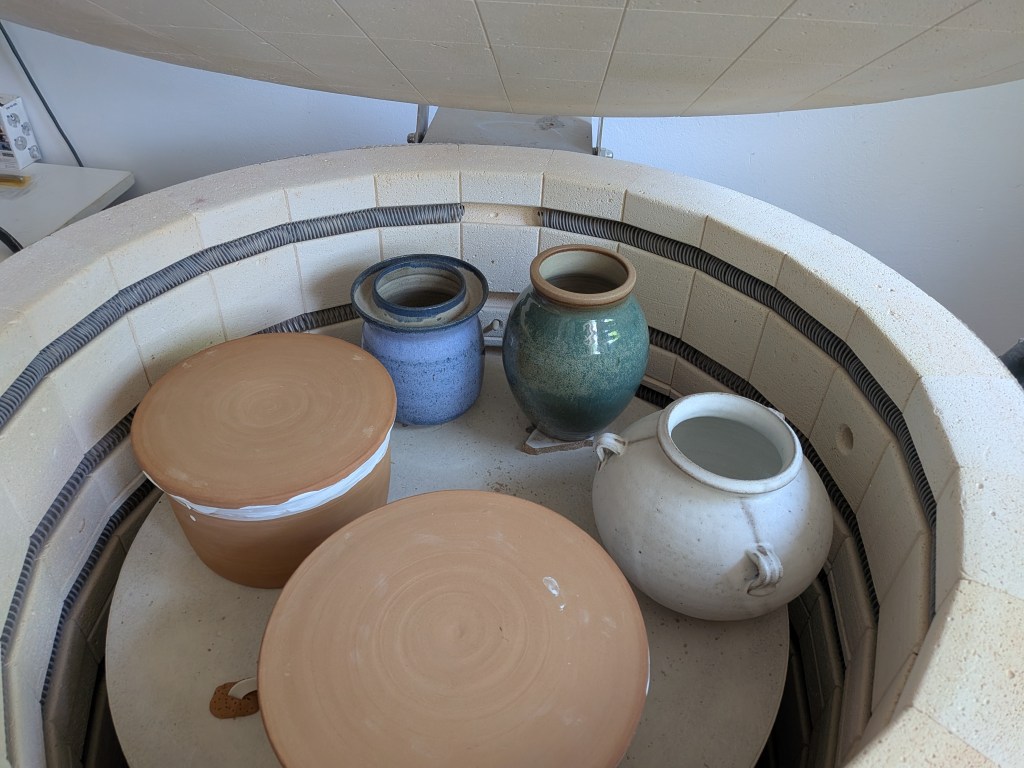
To recap, a saggar is a lidded clay container in which one fires pots. You can check out my previous blog post on how to do it in more detail. Simply, one inserts a bisqueware pot coated with a reduction glaze, add some charcoal chunks around the base, seal the lid, and fire in the electric kiln.
This method has brought me a few nice results and some disappointing ones. And this test was no different. However, I am now fairly sure why they work, or don’t.
Saggar firing glaze results – June 2026
This time I tried two shino glazes, a fake ash glaze, and a feldspathic crackle.
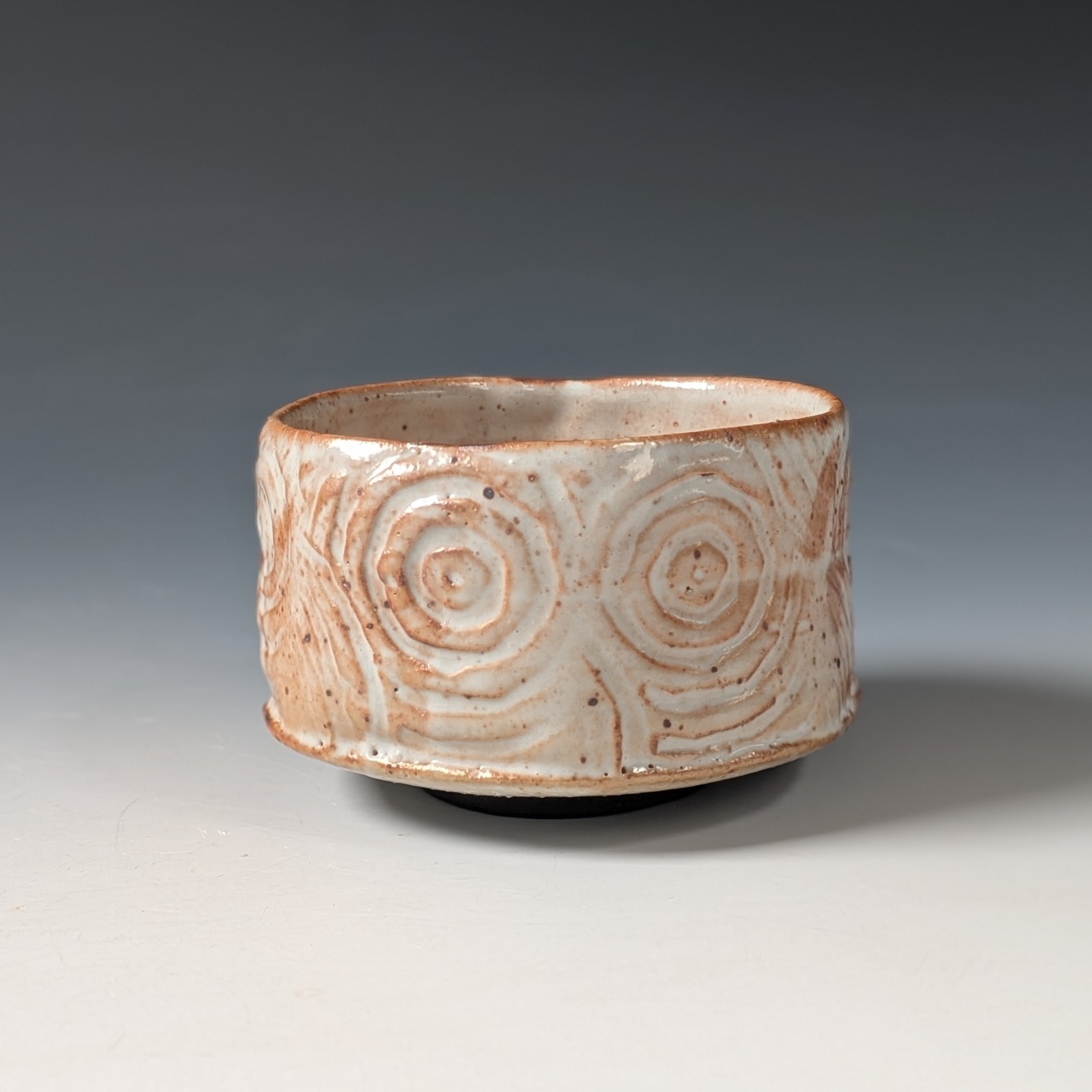
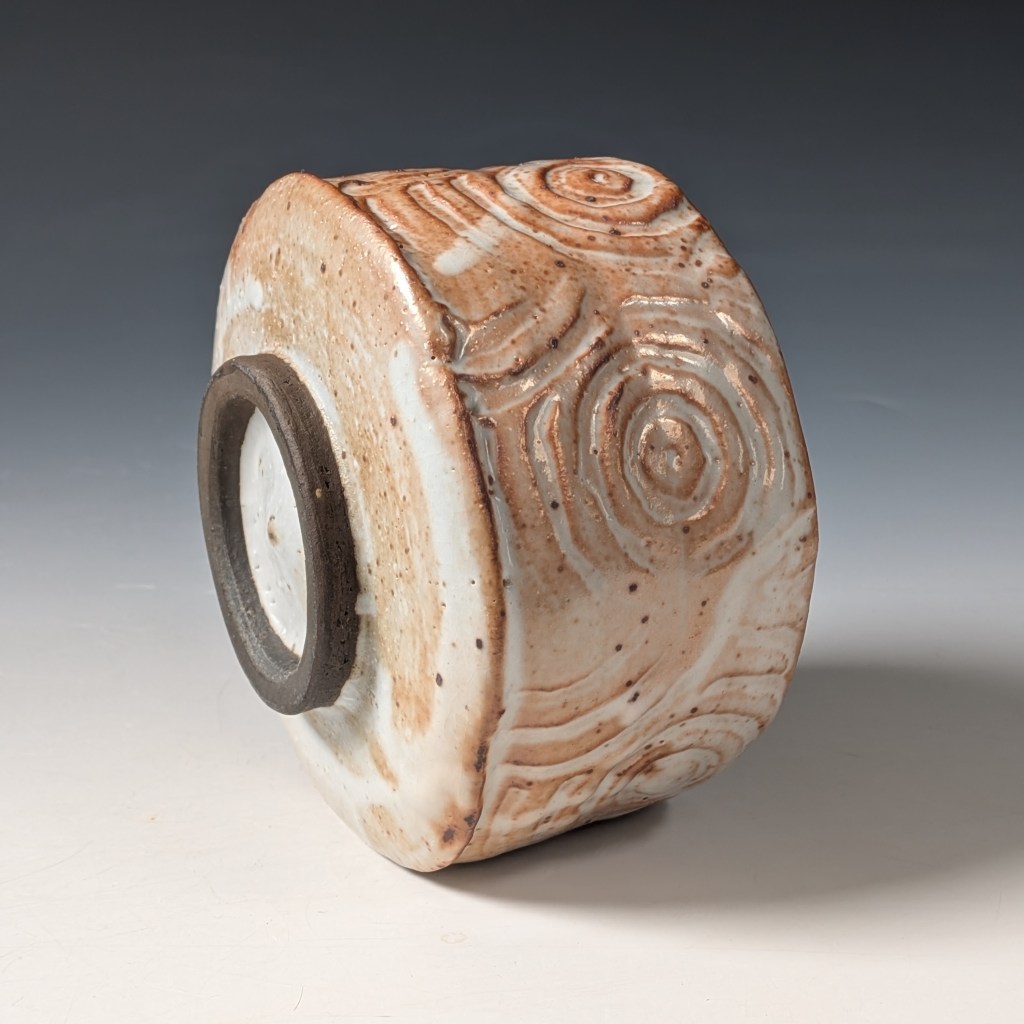
The big surprise was how well the shinos came out. A lovely pearlescent orangey-pink that I never really got in the gas kiln. It may be down to the atmosphere or the clay… well, it’s both I guess. I was using some mixed white and iron clay reclaim and it was fairly light in tone, so I didn’t get the dark rusty reds of shino in the gas kiln.
The clay did trap some carbon, coming out dark brown but not black cored (a technical fault that can occur in heavy reduction).
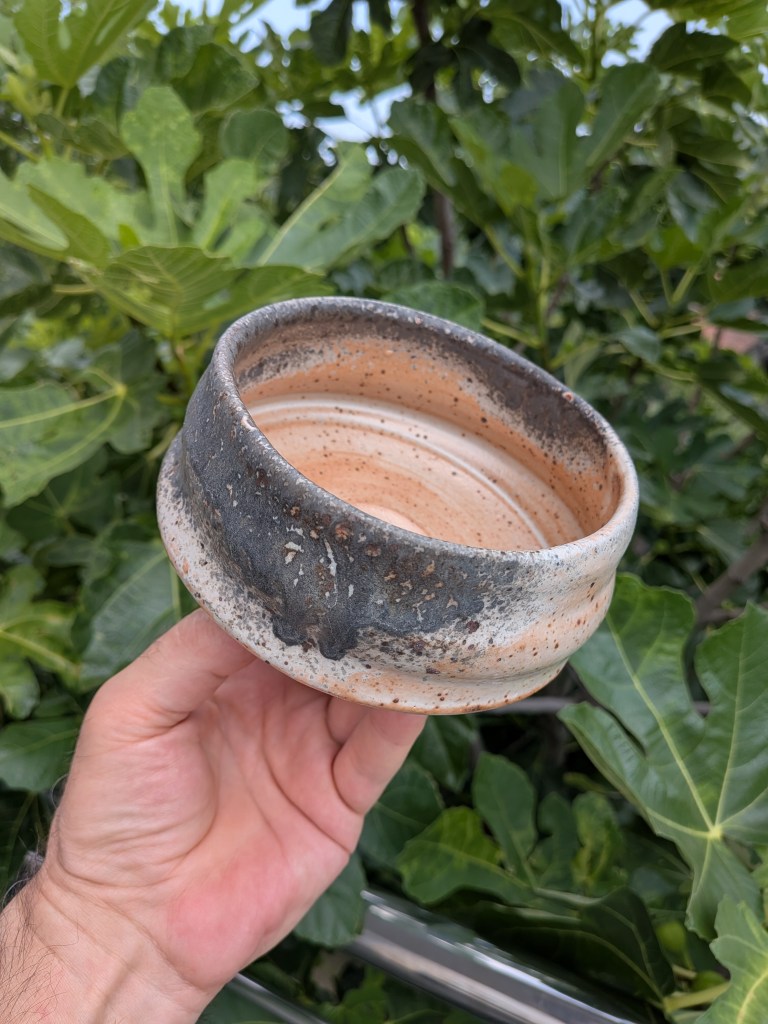
On the other of the two shino tea bowls, I had sprinkled some ash over the rim – a technique that works well in the gas kiln, turning green with nice long drips.
In the saggar though, the ash trapped a lot of carbon and came out black. It’s kind of cool, but probably not what most people want.
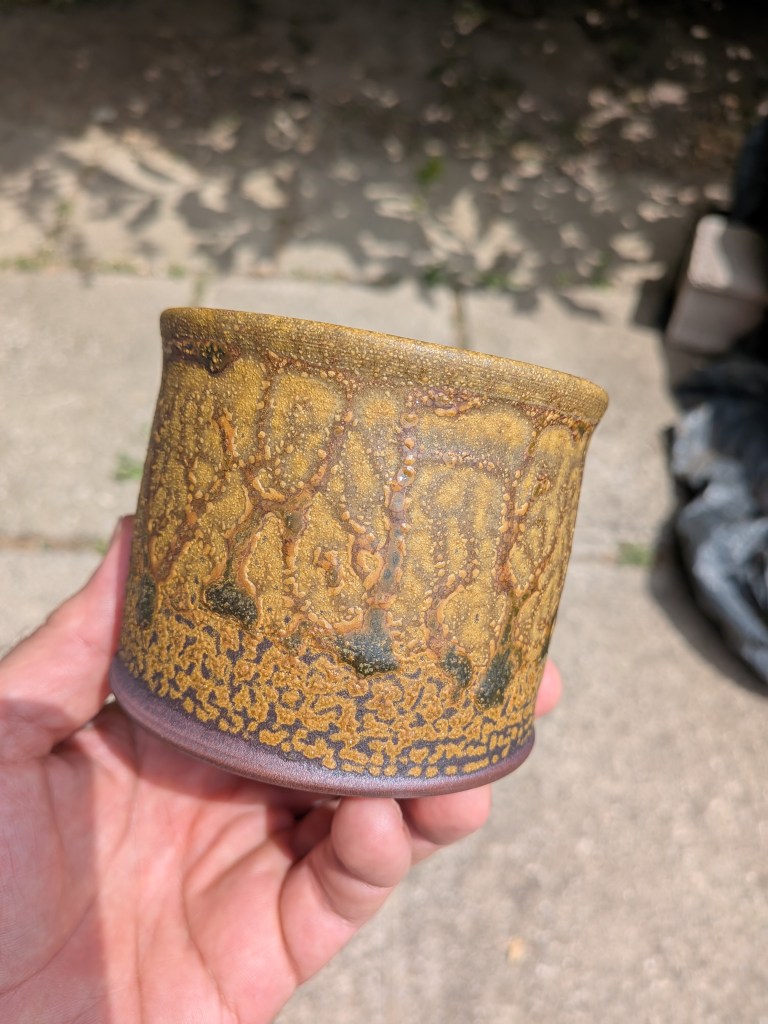
The third glaze that came out quite well was Bruce’s yellow, a fake ash glaze.
In terms of the saggar firing, this came out really well. I think there is another problem with the recipe that meant it came out very ‘dry’ – rough to touch and not glossy or satin. This, I suspect, was because I used my own Albany slip substitute since I don’t own the real ingredient, and maybe it is a bit off.
The green drips are great. I hope I can fix the recipe!
The big glaze fail
The fourth item I saggar fired this time was a crackle glaze which has a lot of feldspar in it, plus some iron oxide for green in reduction. This should be glassy and somewhat transparent. Here is my result:

So, my theory is that, because charcoal starts burning and releasing carbon gases at around 700C/1292F (per Wikipedia), some glazes that seal over early don’t allow the carbon to burn off and hence turn black (the carbon is trapped within the glaze).
Caveat: I should test this glaze in the gas kiln to make sure there isn’t another issue. But it for sure has a lot of carbon trapping.
It would also be interesting to try with much less charcoal and see if there is a better result.
Great for winter firing
The overall lesson is that some glazes do great with the saggar method, and others really do not. One has to test, test, test, as always. If you are sensible (unlike me), you would use test tiles and do a whole bunch of glazes at one time.
The good news for me is that I can use saggars to fire shino pots in the freezing winter when it is neither fun nor easy to use the gas kiln outside.
I need to make a bunch of saggars to have scope for this, maybe including a few tall ones for bottle and vases.
Another thing to note is, I really love experimenting like this! I am always trying new glazes and this adds a new dimension.
Warning: reduction in an electric kiln has potential to harm your elements. Try this at your own risk and with care (seal the saggars!).
 Dan Palmer Ceramics